
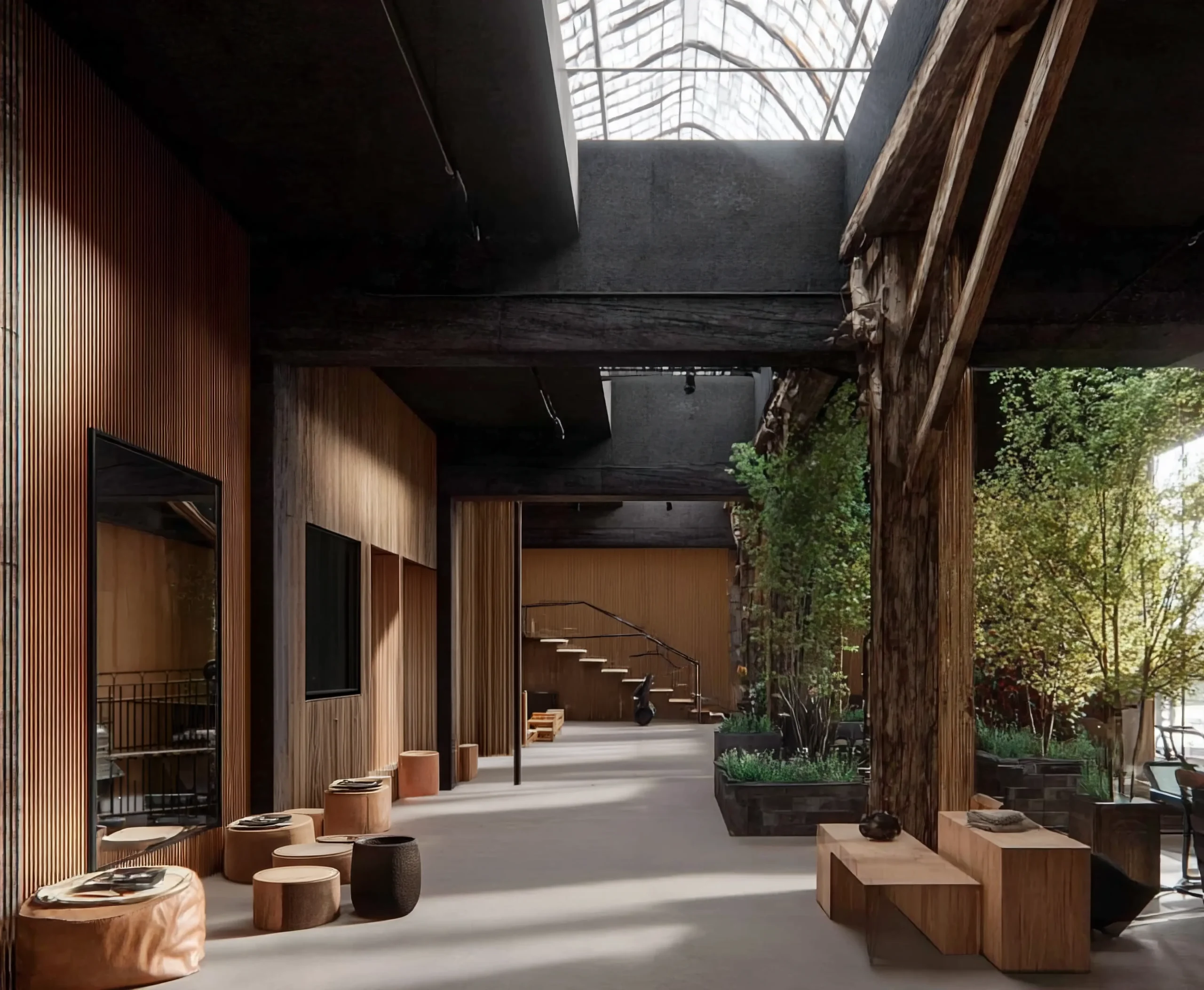
In the new era of wellness. The gym is no longer just a container for equipment, but a biological ecosystem. By integrating nature, natural light, and organic material into a gym space—a concept known as biophilic design—developers are moving beyond pure utility to create «High-Performance Sanctuaries» that align with the human body’s innate rhythms.
Why Biophilic Design Matters in Gym Settings
In modern fitness facilities, Biophilic design goes beyond just an aesthetics choice, it fundamentally enhance the workout experience.
Recent research from Frontiers in Psychology (Sept 2025) has identified a critical metric for facility operators: Exercise Immersion. The study found that Biophilic design significantly predicts a member’s intention to continue their subscription. Specifically, Biophilic elements account for a 51.1% increase in behavioral immersion. This means that members don’t just show up, they become psychologically connected to the space.
Furthermore, exercising in environments that incorporate natural elements leads to reduced stress, enhanced cognitive function, and improve mood regulation. Making workouts feel less like a chore and more like a rejuvenating escape. For facility owners, this boost in motivation to workout translates directly into member retention.
7 Ways to Implement Biophilic Design
1. Optimize Natural Light & Circadian Rhythms
Natural light is the primary driver of our internal clocks. Proper exposure boosts serotonin and maintains high energy levels during intense training.
Implementation: Use floor-to-ceiling windows, skylights, or «circadian lighting» systems that transition from cool blue tones in the morning to warmer, sunset hues in the evening.
2. The «Sight of Green» and Living Walls
Visual contact with greenery reduces muscle tension and lowers heart rates during recovery intervals.
Implementation: Install living walls in reception areas. For functional zones, use durable, low-maintenance plants like Snake Plants or Pothos that thrive in indoor environments.
3. Auditory Nature Soundscapes
To elevate the sensory experience, use sound as a tool for stress reduction and focus.
Implementation: Integrate high-quality soundscapes (flowing water, rainfall) in recovery or yoga zones to help members achieve a mental «reset.»
4. Tactile Natural Materials
Materials like wood, stone, and cork offer a psychological «warmth» that cold steel and plastic lack.
Implementation: Utilize reclaimed wood for locker room benches, natural stone in wet areas, and sustainable cork or bamboo flooring for movement zones.
5. Grounding Earthy Tones
Color psychology significantly impacts workout intensity and perceived stability.
Implementation: Move away from «hospital-sterile» whites. Use a grounded palette of forest greens, deep terracottas, and stone grays.
6. Performance-Grade Air Quality
Cleaner air supports the body’s ability to push harder and recover faster. In high-intensity zones, air quality is a performance metric.
Implementation: Oxygen-Producing Plants: Large-leaf species (like Fiddle Leaf Figs) help scrub the air. Passive Ventilation: Use cross-ventilation designs or moss walls for natural air filtration.
7. Aromatherapy and Limbic System Engagement
The sense of smell has a direct link to the brain’s limbic system, governing emotion and memory.
Implementation: Use essential oil diffusion (peppermint for respiratory flow, citrus for energy). Use natural charcoal filters to neutralize odors rather than masking them with synthetic fragrances.
Inspiring Examples of Biophilic Design in Gyms
The transformation of traditional fitness environments through biophilic design principles has created some truly remarkable spaces worldwide. These innovative fitness studios and gyms demonstrate how natural elements can be seamlessly integrated into workout environments to enhance both performance and well-being.
The following examples represent a diverse range of approaches to biophilic gym design. Each space tells a unique story of how designers have balanced functionality with nature-inspired aesthetics:
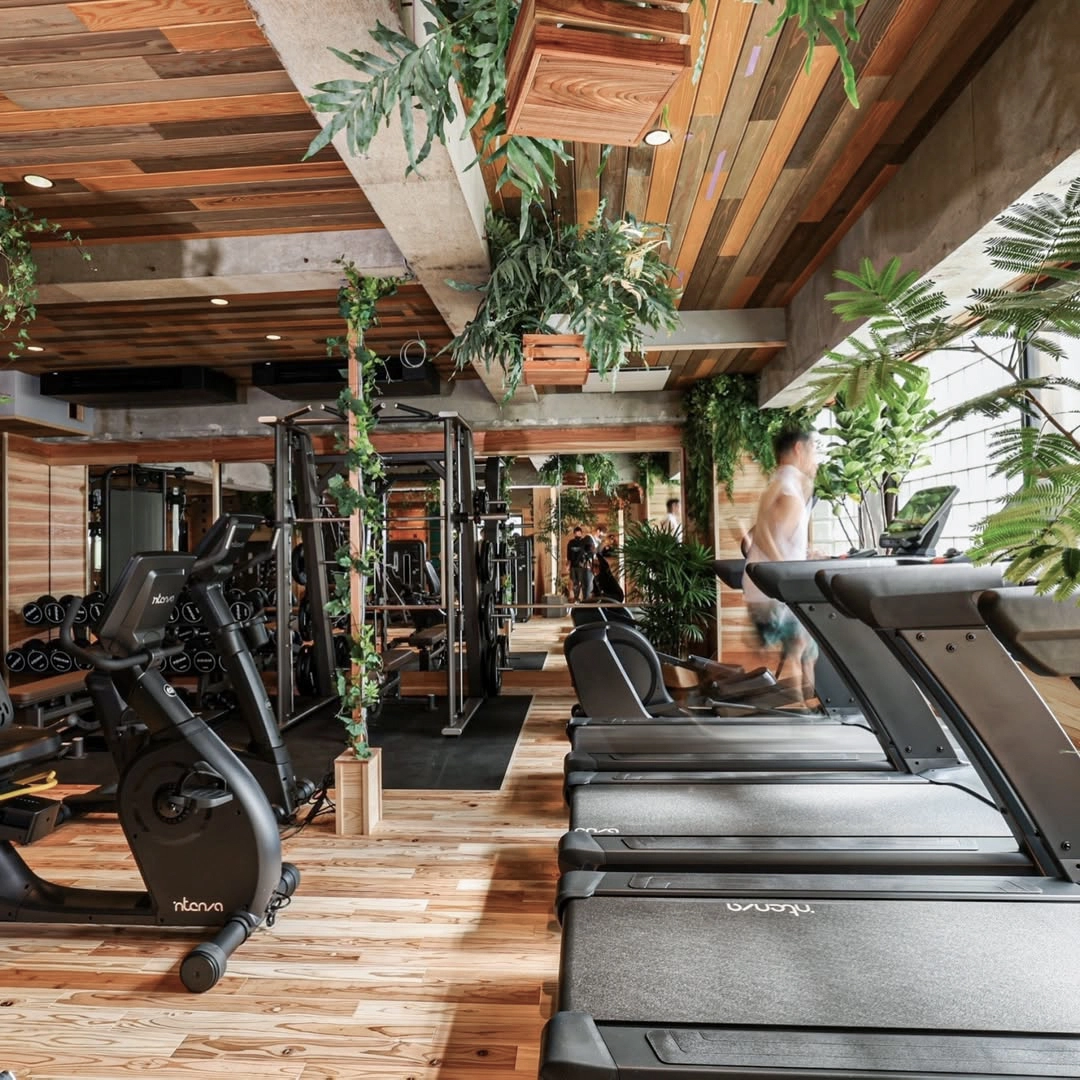
Forest-Inspired Fitness Center — &FOREST Hayama
Based in Japan, &FOREST‘s fitness space functions as a living ecosystem rather than a traditional workout box. Its design philosophy centers on the Japanese concept of Shinrin-yoku (forest bathing), integrating three-dimensional greenery and organic structures into the functional training floor.
- Greenery Immersion: The studio incorporates live plants throughout the workout areas. This «indoor forest» concept is designed to reduce stress and improve air quality, allowing members to feel as though they are exercising in a natural clearing rather than a basement or a sterile room.
- Wooden Interior: The interior is heavily finished with natural timber wood. By using organic materials, the space creates a tactile and visual connection to the forest.
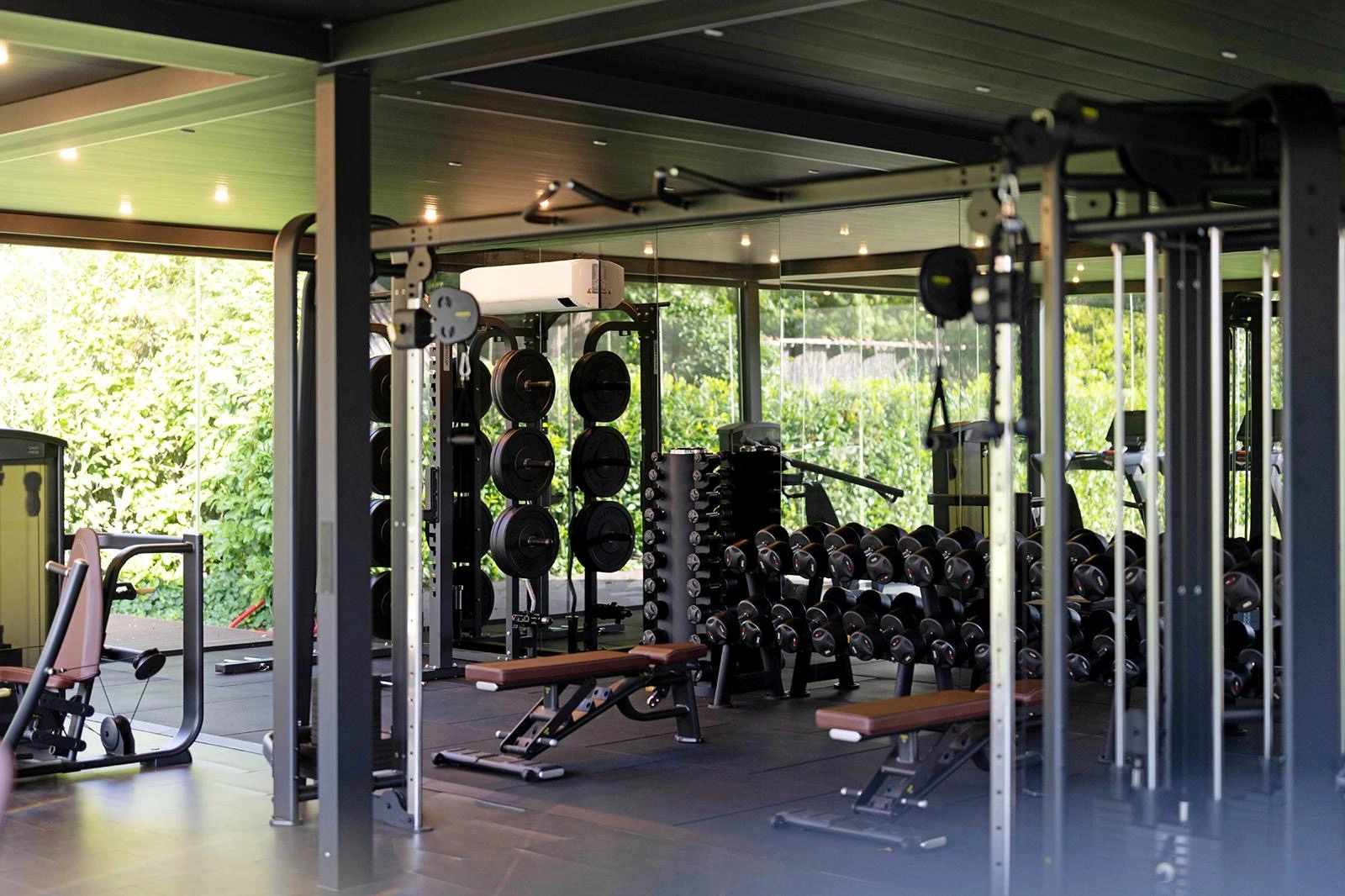
Corporate Gym, Danmark
This container-style gym serves as a prime example of biophilic integration. utilizing a one-way mirror glass facade that allows the structure to disappear into the landscape by reflecting the surrounding trees and sky. This design ensures that those inside have a panoramic view of the outdoors while maintaining complete privacy from the outside world.
- Visual Immersion: The floor-to-ceiling glass and adjacent mirrors provide a constant «sight of green,» which is proven to reduce muscle tension and lower heart rates during recovery.
- Circadian Natural Light: During the day, the space is flooded with natural light, essential for regulating circadian rhythms and boosting serotonin levels to keep energy high.
Key Takeaway
As we move through 2026, the shift of biophilic design from a purely decorative green aesthetic to a core architectural requirement for premium gyms.
Natural design elements deliver measurable benefits: improved air quality through living vertical moss wall, enhanced mood from circadian natural lighting, and reduced stress levels from organic textures. The most successful implementations thoughtfully balance visual impact with practacality.
As fitness facilities continue evolving to meet changing member expectations, biophilic design offers a proven pathway to create spaces that don’t just house exercise equipment, but actively contribute to human health, and happiness. The question isn’t whether to incorporate natural elements, but rather which biophilic strategies will best serve your specific facility and community.